
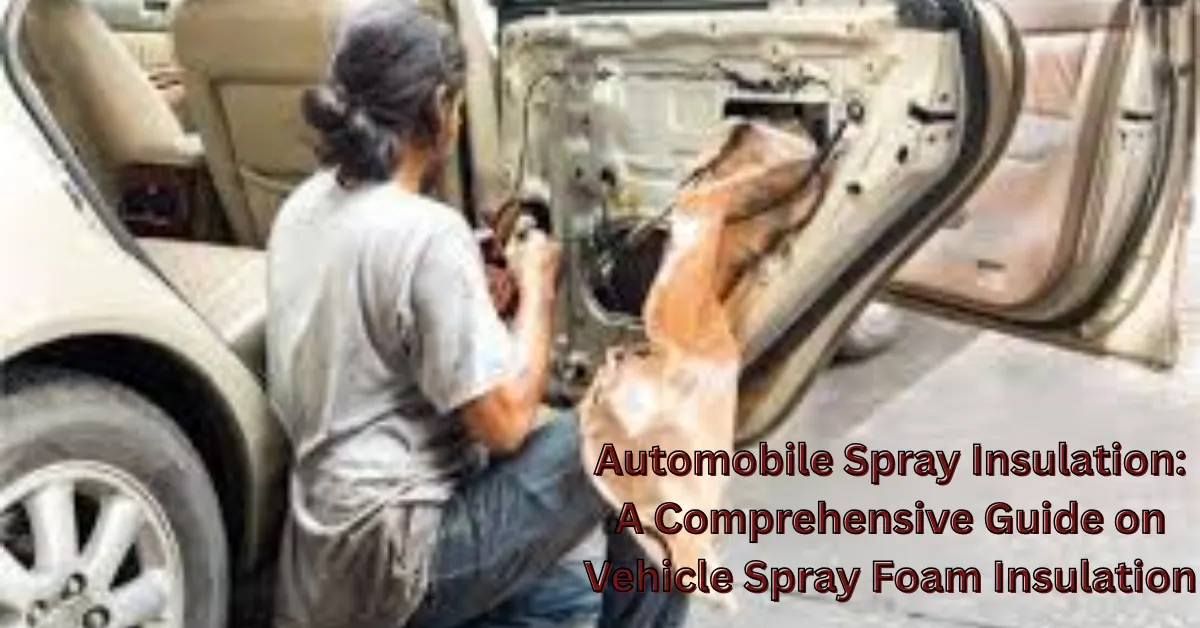
Automotive spray insulation. Automobile Spray Insulation: A Comprehensive Guide on Vehicle Spray Foam Insulation.
It might be difficult to keep the interior of a truck, RV, work vehicle, camper van, or cargo van at a pleasant temperature. Vehicles can get very hot in the summer and uncomfortable and challenging to operate in the cold. Automotive spray insulation can help in this situation.
For car owners who want to enhance comfort, lower noise levels, and boost energy efficiency, spray foam insulation has emerged as the most popular option. It produces a barrier that keeps outside noise out of the car and aids in temperature regulation.
We will describe car spray insulation in this comprehensive guide, along with its advantages, types, installation techniques, pricing, and whether or not you can install spray foam insulation yourself. If you want to read Spray Foam Insulation Warehouse or Garage click here.
Automotive Spray Insulation: What Is It?
One kind of insulation that is sprayed onto car interiors is called automotive spray insulation. The foam fills in gaps, fissures, and difficult-to-reach places by expanding and solidifying after application to form an insulating layer.
Spray foam sticks to metal surfaces immediately, in contrast to conventional insulation materials like fibreglass batts or foam boards. This helps stop heat transmission and air leakage by forming a continuous insulation barrier.
When temperature control and comfort are crucial, automotive spray insulation is frequently utilised in camper vans, RVs, buses, cargo vans, trailers, work trucks, and custom vehicle modifications.
The Significance of Vehicle Insulation
The amount of heat and cold that may pass through a car’s metal body is often underestimated.
Metal quickly absorbs and releases heat from its surroundings because it is an efficient heat conductor.
Inadequate insulation can cause a car to:
Overheating in the summer
Wintertime interior cold
A rise in condensation
Increased energy use for cooling and heating
Road vibrations and noise
Decreased comfort when travelling or camping
These conditions can be greatly improved by adding spray foam insulation, which also makes driving the car more pleasurable all year round.
Advantages of Spray Insulation for Automobiles
Better Temperature Regulation
The superior thermal performance of spray foam insulation is one of its main benefits. Heat transfer between the interior of the car and the outside world is slowed down by the foam’s efficient barrier.
It keeps cold air inside during hot weather. It makes the interior more comfortable by retaining heat in cold weather.
This advantage is particularly useful for mobile workstations, RVs, and camper vans where people spend a lot of time indoors.
Minimises Noise on the Road
Tires, wind, and traffic may all produce a lot of noise when driving on a highway. Spray foam insulation lessens the propagation of sound through car walls and ceilings by absorbing vibrations.
As a result, driving is more enjoyable and the cabin is quieter. Spray foam is a popular choice among van conversion enthusiasts due to its ability to reduce noise.
Avoids Condensation
When cold metal surfaces come into contact with warm air, condensation happens. Over time, this moisture accumulation may cause rust damage, mould, mildew, and offensive odours.
By establishing a thermal barrier between the metal body and the interior air, spray foam insulation aids in the reduction of condensation. For RVs and camper vans used in different climates, this protection is particularly crucial.
Closes Tiny Cracks and Gaps
Spray foam expands after application, in contrast to inflexible insulation boards. It can now fill in small crevices, seams, and difficult-to-reach areas thanks to its enlargement.
As a result, the insulation performs better overall and there are less air leaks.
Boosts Energy Efficiency
Because insulation helps keep interior temperatures stable for longer, vehicles with heating or cooling systems consume less energy.
This may result in reduced fuel use and generator use for RV owners.
Vehicle Spray Foam Insulation Types
To get the greatest results, spray foam selection is crucial.
Spray Foam with Open Cells
Open-cell foam is flexible and lightweight. It provides good sound absorption and expands considerably when applied.
Benefits consist of:
Cheaper price
Outstanding decrease of noise
lightweight construction
However, if not adequately covered, it can collect moisture and has a decreased insulating value.
Spray Foam with Closed Cells
Closed-cell spray foam has a better insulating value and is denser.
Advantages consist of:
Improved thermal efficiency
Resistance to moisture
Increased structural strength
Durability with time
Closed-cell foam is frequently regarded as the ideal option for car insulation projects due to these benefits.
Many car owners believe the investment is beneficial even though it is more expensive than open-cell foam.
The Best Automobiles for Insulation with Spray Foam
Many different kinds of vehicles can benefit from spray foam insulation.
Vans for campers- spray foam insulation for vehicles
Spray foam is frequently installed by van life enthusiasts to provide cosy living areas for year-round travel.
Motorhomes and RVs
RVs have lower energy expenses and better temperature control.
Vans for cargo
Businesses that use cargo vans can enhance driver comfort and safeguard equipment that is sensitive to temperature.
Work Trucks
When running mobile workshops and service vans, insulation keeps employees comfortable.
Conversions of School Buses
In order to keep the inside temperatures of converted buses acceptable, significant insulation is frequently needed.
Is It Possible to Install Spray Foam Insulation on Your Own?
Among car owners, a typical query is:
Is it possible to install spray foam insulation on your own?
Yes, but there are certain crucial things to take into account.
There are DIY spray foam kits available for car conversions and minor projects. Usually, these kits come with hoses, chemicals, spray guns, and instructions.
A do-it-yourself installation can be effective if you are at ease with simple construction tasks and adhere to safety regulations.
However, using spray foam calls for meticulous planning and appropriate expertise.
Errors may result in uneven coverage, material waste, or subpar insulation.
Many owners prefer professional installation for large vehicles or costly changes.
Equipment Required for Do-It-Yourself Spray Foam Insulation
Assemble the tools you’ll need before beginning a do-it-yourself job.
Usually, you’ll need:
Kit for spray foam insulation
Gloves for protection
Goggles for safety
mask for respirators
Disposable coveralls
A utility knife
Sheets of plastic
Painter’s tape
Cleaning materials
Because spray foam chemicals can irritate skin and lungs, safety equipment is particularly crucial.
How to Use Your Own Spray Foam Insulation
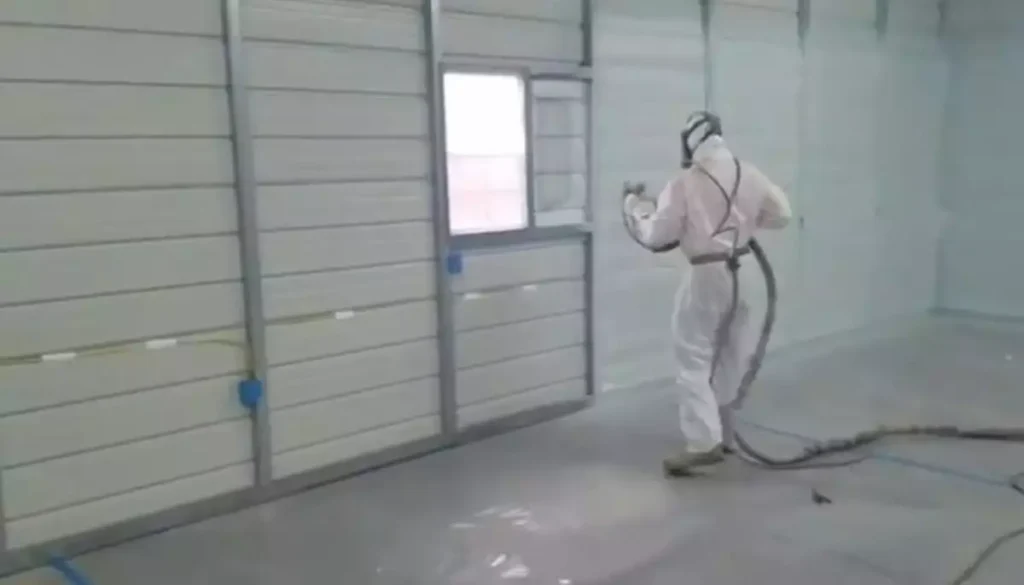
Step 1: Get the car ready
Eliminate any parts that could obstruct spraying, such as floors and internal panels.
To get rid of dust, oil, and filth, carefully clean every surface.
The foam can adhere correctly on a clean surface.
Step 2: Cover Non-Sprayable Areas
Protect windows, wiring, mechanical components, and completed surfaces using plastic sheeting and painter’s tape.
This stops unintentional overspray.
Step 3: Put on Safety Gear
Before handling chemicals, put on safety gear.
Exposure to spray foam vapours and particles can be avoided with the right protection.
Step 4: Combine and Get the Foam Ready
Pay close attention to the manufacturer’s directions.
Certain items may need to be prepared at a certain temperature.
Step-5 Apply Thin Layers in Step Five
Spray foam quickly expands. Instead of applying a single heavy coating, apply several small coats.
This method aids in achieving uniform covering and enhances control.
Step 6: Let the Foam Cure- automotive spray insulation
As advised by the manufacturer, give the product enough time to cure after application.
During this time, the foam will solidify and fully expand.
Step 7: Cut Off Extra Foam
For interior finishing, use a utility knife to cut away extra material and smooth surfaces.
Step 8: Reinstall Interior Parts
Reinstall the flooring, wall panels, and other interior elements after the insulation is finished.
Typical DIY Errors to Avoid
A lot of novice installers make blunders that can be prevented.
Among the most prevalent are:
Using too much foam
Disregarding safety measures
Applying a mist on unclean surfaces
obstructing channels for drainage
Neglecting to safeguard wiring
Applying at the wrong temperature
These problems can be avoided by carefully planning the project.
How Much Does Spray Insulation for Automobiles Cost?
The size of the car, the thickness of the insulation, and whether the job is done professionally or as a do-it-yourself project all affect the cost.
Typical approximations consist of:
Do It Yourself Installation
Small car: $200 to $500
$400–$1,000 for a camper van
Big RV: $1,000 to $2,500
Expert Installation
$1,000 to $3,000 for a cargo van
Conversion of a camper van: $1,500–$5,000
$3,000 to $8,000 for a large motorhome
Professional installation is more expensive, but it frequently offers superior coverage and long-term performance.
Is Spray Foam Superior to Other Options for Vehicle Insulation?
Owners of vehicles frequently contrast spray foam with substitutes like fibreglass, foam boards, and mineral wool.
Spray foam has a number of benefits.
Improved air sealing
Improved performance of insulation
Better management of moisture
Better gap filling- auto spray insulation
It might not always be the most affordable choice, though.
Although fibreglass and foam boards can be less expensive, they frequently require more work and may leave gaps that lower efficiency.
Closed-cell spray foam is regarded by many experts as one of the best car insulation options for optimal performance.
Upkeep and Durability – auto spray insulation
The longevity of spray foam insulation is one of its outstanding qualities.
Spray foam doesn’t significantly deteriorate for decades when put properly.
It doesn’t sag, settle, or become less effective with time like certain conventional insulation materials.
Maintenance needs are usually low, but routine inspections can assist find any areas that need repairs.
Is Spray Insulation for Automobiles Worth It?
Yes, for the majority of car owners.
Spray foam insulation is an excellent investment since it offers temperature control, noise reduction, moisture protection, and increased comfort.
High-quality insulation can significantly improve the whole experience, whether you are renovating a work vehicle, updating an RV, or converting a camper van.
Even though the initial expense might seem high, the long-term advantages frequently exceed the outlay.
Concluding Remarks
One of the best methods for increasing the economy and comfort of a car is automotive spray insulation. Spray foam helps regulate temperature, lower noise, stop condensation, and boost energy efficiency by forming a continuous thermal barrier.
Whether you opt to install spray foam insulation yourself or hire a professional, getting the best results requires careful planning and high-quality supplies. can you apply spray foam insulation yourself? You will get the answer to this question.
Spray foam insulation may turn an uncomfortable area into a peaceful, energy-efficient, and pleasurable setting that works well in all seasons for camper vans, RVs, cargo vans, buses, and work vehicles.
Do let us know how you feel about this information by commenting.
Like our Facebook page and follow for other updates like this.