
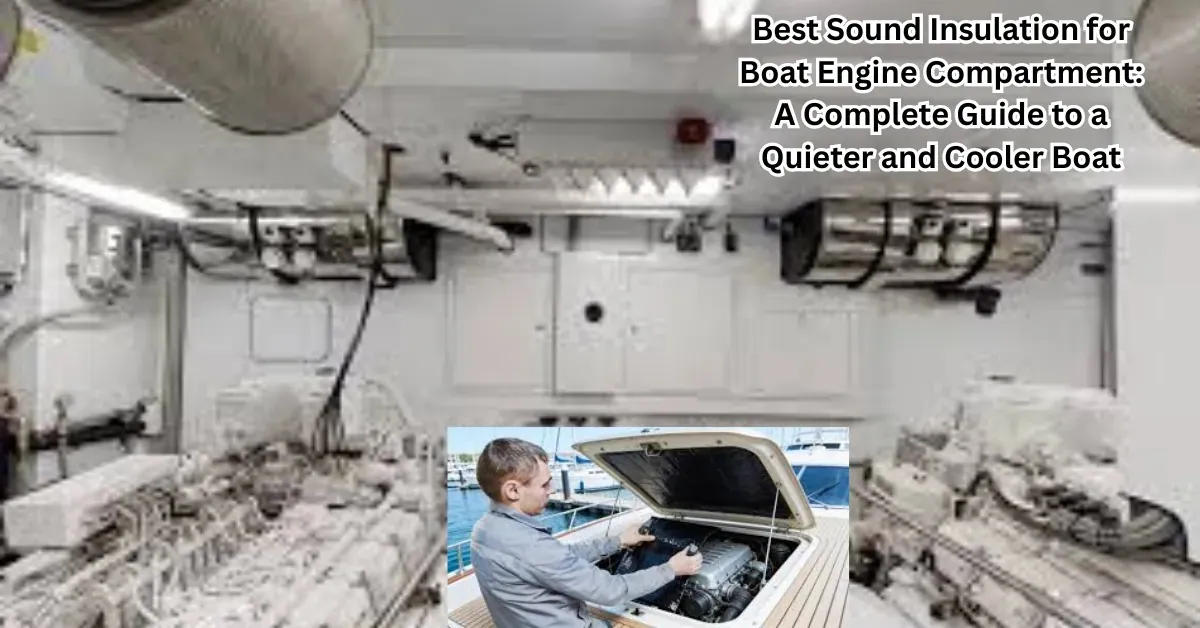
Best Sound Insulation for Boat Engine Compartment: A Complete Guide to Quiet and Comfortable Boating
A loud boat motor is the fastest way to disrupt a quiet day on the water. Engine noise can rapidly wear everyone out, whether you own a speedboat, yacht, fishing boat, or cabin cruiser. In addition to impairing comfort, loud vibrations, continuous humming, and engine heat can hinder communication and detract from the whole boating experience.
Fortunately, one of the best improvements you can do to your boat is to install sound insulation inside the engine room. By assisting the engine compartment in maintaining better temperatures, the proper insulation can greatly lower engine noise, enhance heat resistance, and even boost fuel efficiency.
In this guide, you’ll learn the best materials for insulating a boat engine compartment, how to install them properly, common mistakes to avoid, and maintenance tips to keep your insulation performing for years. If you want to read the information about Spray Foam Box Truck Insulation click here and read the post.
Why Should You Insulate a Boat Engine Compartment?
Boat engines produce both airborne noise and vibration. Without insulation, these sounds travel through the fiberglass or aluminum hull and spread throughout the boat. best sound insulation for boat engine compartment we will see-
Adding marine-grade sound insulation provides several important benefits.
It reduces engine noise, making conversations much easier while cruising. Passengers enjoy a quieter and more relaxing environment. High-quality insulation also helps absorb engine heat, protecting nearby equipment from excessive temperatures. In addition, less vibration means fewer rattles, improving comfort and extending the life of many boat components.
The best materials for insulating a boat engine compartment, how to install them correctly, typical mistakes to avoid, and maintenance advice to keep your insulation functioning for years are all covered in this book.
Why Does a Boat Engine Compartment Need to Be Insulated?
Both airborne noise and vibration are produced by boat motors. These noises propagate throughout the boat due to the fiberglass or aluminum hull’s lack of insulation.
There are numerous significant advantages to adding marine-grade sound insulation.
It makes it much easier to have discussions while driving by lowering engine noise. The atmosphere is calmer and quieter for passengers. Additionally, good insulation aids in absorbing engine heat, shielding adjacent equipment from high temperatures. Additionally, decreased vibration results in fewer rattles, which enhances comfort and prolongs the life of numerous boat parts.
Appropriate engine insulation can have a significant impact on those who live aboard, cruise, or fish for extended periods of time.
Why Do Boat Engines Make Such Loud Noises?
Boat engine noise is produced by a variety of interrelated sources.
Noise from combustion is produced by the engine itself. Moving mechanical components produce vibrations that pass through the hull, and the exhaust system provides an additional layer of sound. The total noise level is further influenced by water pumps, generators, cooling fans, and transmissions.
Many boats with little or no insulation actually increase engine noise because fiberglass reflects sound instead of absorbing it.
Features to Look for in Marine Sound Insulation

Not every insulation product is suitable for boats.
Marine environments expose insulation to moisture, saltwater, engine oil, fuel vapors, and high temperatures. Choosing automotive insulation instead of marine-grade products often leads to early failure.
The best marine sound insulation should include:- best sound insulation for boat engine compartment
- Excellent sound absorption
- Heat resistance above 200°F (93°C)
- Moisture resistance
- Oil and fuel resistance
- Fire-retardant construction
- Durable aluminum foil facing
- Strong waterproof adhesive
Quality materials may cost more initially, but they last much longer in harsh marine conditions.
Best Sound Insulation Materials for Boat Engine Compartments
Choosing the right material depends on your boat size, engine type, and budget.
1. Mass Loaded Vinyl (MLV)– best sound insulation for boat engine compartment
Mass Loaded Vinyl is considered one of the best sound barriers available.
Unlike foam, MLV blocks sound from passing through walls instead of simply absorbing it. It is dense, flexible, and highly effective against engine noise.
Advantages include:
- Excellent sound blocking
- Moisture resistant
- Long lifespan
- Flexible installation
Many premium marine insulation products combine MLV with acoustic foam for maximum performance.
2. Marine Acoustic Foam
Closed-cell acoustic foam is designed specifically for boats.
The foam absorbs sound waves while resisting moisture and mildew. Closed-cell foam is much better than open-cell foam because it won’t absorb water.
Benefits include:
- Lightweight
- Excellent sound absorption
- Water resistant
- Easy to cut and install
Foam is often laminated with aluminum foil to improve heat resistance.
3. Composite Marine Soundproof Panels
Composite panels combine several layers into one product.
Typically these include:
- Aluminum foil
- Acoustic foam
- Mass Loaded Vinyl
- Fire-resistant backing
This combination delivers excellent sound reduction while also protecting against engine heat.
Many professional boat builders use composite panels because they provide outstanding overall performance.
4. Fiberglass Marine Insulation
Marine-grade fiberglass insulation can withstand high temperatures and provides both thermal and acoustic insulation.
However, it must be completely enclosed because exposed fiberglass fibers can become airborne and create maintenance issues.
5. Butyl Rubber Sound Deadening Mats
These mats are commonly applied directly onto fiberglass or metal surfaces before installing foam insulation.
They reduce vibration throughout the hull and engine compartment.
Advantages include:
- Reduces vibration
- Easy installation
- Waterproof
- Long-lasting
Using butyl mats together with acoustic foam often produces the quietest results.
Best Sound Insulation Materials for Boat Engine Compartments
Several insulation materials work well for marine applications, but each has different strengths.
1. Marine Acoustic Foam– best sound insulation for boat engine compartment
Marine acoustic foam is one of the most popular choices for engine compartments because it absorbs high-frequency engine noise very effectively. Many products include a reinforced aluminum foil surface that reflects radiant heat back toward the engine while protecting the foam from moisture and oil.
The foam is lightweight, easy to install, and available in various thicknesses, making it suitable for most recreational boats.
2. Mass Loaded Vinyl (MLV)
Mass Loaded Vinyl is a dense, flexible barrier designed to block airborne sound rather than absorb it. It performs exceptionally well against low-frequency engine noise that ordinary foam cannot stop.
Many premium marine insulation systems combine MLV with acoustic foam to create both a sound barrier and a sound absorber in one product.
3. Fiberglass Marine Insulation
Fiberglass insulation has been used in marine applications for many years because it provides both thermal and acoustic benefits. Modern marine fiberglass insulation is usually wrapped in protective foil or vinyl coverings to prevent moisture absorption.
It offers good heat resistance but requires careful installation to avoid exposed fibers.
4. Closed-Cell Foam Insulation
Closed-cell foam does not absorb water, making it ideal for boats operating in wet environments. It also provides decent thermal insulation while helping reduce vibration and moderate noise.
Although it does not absorb sound as effectively as specialized acoustic foam, it performs well when combined with other soundproofing materials.
5. Composite Marine Insulation Panels
Premium marine insulation often combines multiple layers, including acoustic foam, Mass Loaded Vinyl, and aluminum foil facing. These engineered panels deliver excellent sound reduction while resisting moisture, oil, and high temperatures.
Although more expensive, they provide the best overall performance for engine compartments.
How to Choose the Right Insulation
The best insulation depends on your boat type, engine size, available space, and budget.
If your primary goal is reducing engine noise, composite insulation panels with foam and Mass Loaded Vinyl offer the highest performance. For smaller boats, foil-faced marine acoustic foam provides an excellent balance between cost and effectiveness.
Always verify that the insulation is specifically rated for marine engine compartments rather than automotive use.
How to Insulate a Boat Engine Compartment
Installing marine insulation is a project that many boat owners can complete over a weekend.
Step 1: Clean the Engine Compartment
Remove any old insulation, grease, oil, loose paint, or dirt.
A clean surface allows adhesives to bond properly.
Allow everything to dry completely before installation.
Step 2: Measure Every Surface
Carefully measure:
- Engine hatch
- Side walls
- Bulkheads
- Ceiling
- Access panels
Making cardboard templates first helps reduce mistakes.
Step 3: Cut the Insulation– best sound insulation for boat engine compartment
Use a sharp utility knife and straightedge.
Always cut slightly larger than your measurements so the material fits snugly.
Step 4: Apply Marine Adhesive
Many marine insulation products include peel-and-stick backing.
For heavier insulation, apply a marine-grade high-temperature adhesive.
Press each panel firmly into place.
Use a roller to eliminate air pockets.
Step 5: Seal the Edges
Seal joints with aluminum foil tape.
This helps improve appearance while preventing moisture from entering behind the insulation.
Step 6: Check Clearance– best sound insulation for boat engine compartment
Never install insulation where it could touch:
- Exhaust manifolds
- Belts
- Pulleys
- Cooling fans
- Moving engine parts
Leave adequate ventilation around the engine according to manufacturer recommendations.
Common Installation Mistakes
Many first-time installers reduce insulation performance by making simple mistakes.
One common error is using household insulation instead of marine-grade materials. Household products quickly absorb moisture and deteriorate.
Another mistake is covering ventilation openings. Boat engines require proper airflow for safe operation.
Some owners skip surface cleaning before installation. Dirty surfaces prevent adhesives from bonding securely.
Leaving gaps between insulation panels also allows sound to escape, reducing effectiveness.
Finally, using low-temperature adhesives can cause insulation to peel away when engine temperatures rise.
How Much Noise Can You Reduce?
The amount of noise reduction depends on the quality of materials and installation.
Typical improvements include:
| Insulation Type | Estimated Noise Reduction |
| Acoustic Foam | 4–8 dB |
| Mass Loaded Vinyl | 8–12 dB |
| Composite Panels | 10–20 dB |
| Full Professional Installation | Up to 25 dB |
Even a 10 dB reduction makes the engine sound about half as loud to the human ear.
How Much Does Boat Engine Sound Insulation Cost?
Costs vary depending on boat size and material quality.
Small fishing boats generally require between $150 and $300 worth of insulation materials.
Medium-sized cabin boats usually cost between $300 and $700.
Large yachts may require $1,000 or more for complete engine compartment insulation.
Professional installation adds labor costs but ensures the best results.
Maintaining Your Boat Engine Insulation– best sound insulation for boat engine compartment
Proper maintenance helps insulation last for many years.
Inspect the engine compartment every season for loose edges, water damage, or oil contamination. Wipe aluminum surfaces clean whenever dirt or grease builds up. Replace damaged sections immediately before moisture spreads underneath the insulation.
Avoid spraying harsh solvents directly onto foam insulation, as some chemicals can weaken adhesives.
With routine care, quality marine insulation can easily last 10 to 15 years.
Additional Tips for a Quieter Boat– best sound insulation for boat engine compartment
Engine insulation works even better when combined with other noise-reduction improvements.
Keep your engine properly tuned since poorly maintained engines often produce more noise and vibration. Replace worn engine mounts because damaged mounts transfer vibrations directly into the hull. Tighten loose panels and hardware to eliminate rattles. Installing quieter marine exhaust components can also make a noticeable difference.
Together, these improvements create a much more peaceful boating experience.
Is DIY Installation Worth It?
For most boat owners, the answer is yes.
Installing engine compartment insulation requires patience rather than advanced technical skills. As long as you use marine-grade materials and follow safe installation practices, you can achieve professional-looking results while saving hundreds of dollars in labor costs.
If your boat has a very complex engine room or multiple engines, professional installation may be the better option.
Conclusion of best sound insulation for boat engine compartment
A quieter boat is a more enjoyable boat. Whether you’re heading out for a weekend fishing trip, entertaining family on a cruise, or spending long days on the water, reducing engine noise makes every journey more relaxing.
By choosing high-quality marine sound insulation, carefully preparing the engine compartment, and following proper installation techniques, you can dramatically improve comfort while also protecting your boat from excess heat and vibration.
Although installing boat engine insulation requires some time and attention to detail, the long-term benefits are well worth the effort. You’ll enjoy clearer conversations, less fatigue, improved thermal protection, and a boating experience that feels far more refined every time you leave the dock.
Do let us know how you feel about this information by commenting.
Like our Facebook page and follow for other updates like this.