
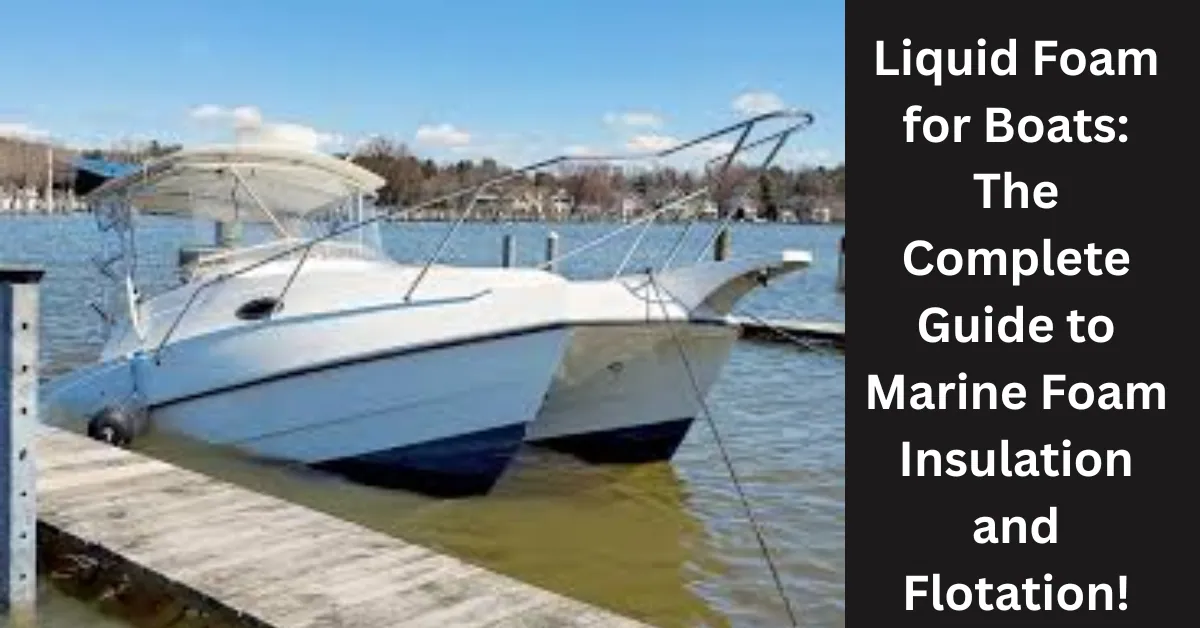
Liquid Foam for Boats: The Complete Guide to Marine Foam Insulation and Flotation
Boats are always in contact with water, dampness, temperature fluctuations, and challenging marine environments. Whether you own a fishing boat, sailboat, pontoon boat, or recreational vessel, maintaining safety and comfort on the water is a top priority. Liquid foam is one of the best solutions found in contemporary boats. This versatile material helps improve flotation, insulation, structural strength, and overall performance.
Because it provides several advantages in a single application, liquid foam for boats has grown in popularity among boat owners, manufacturers, and marine repair specialists. When fitted correctly, it can lessen unwanted noise, increase energy efficiency, prevent moisture-related problems, and help boats stay afloat even after damage. Liquid foam for boats is generally very effective.
In this comprehensive guide, we will explore everything you need to know about liquid foam for boats, including its uses, benefits, installation process, and important considerations before using it in your vessel. If you want to know the information about Wet Spray Foam Insulation, then click here and check it.
What Is Liquid Foam for Boats?– Liquid foam for boats
After being prepared and applied, liquid foam—a specifically made polyurethane foam—expands from its initial liquid state. It fills voids, spaces, and compartments inside a boat as it grows. The foam becomes stiff, light, and extremely resistant to absorbing water after curing.
Typically, marine-grade liquid foam is made as closed-cell foam. Millions of small, sealed cells make up closed-cell foam, which keeps water out of the substance. This characteristic makes it ideal for marine environments where constant exposure to moisture is unavoidable.
Liquid foam, in contrast to conventional insulating materials, adapts to uneven spaces to provide full coverage and optimal efficacy. It can reach places that would be challenging to strengthen or insulate because to its growing nature.
Why Liquid Foam Is Necessary for Boats
Compared to houses and automobiles, boats encounter particular difficulties. Both performance and safety may be impacted by ongoing exposure to water, vibration, collision, and shifting weather. Several of these issues are concurrently addressed by liquid foam.
Flotation is one of the main reasons liquid foam is used by boat manufacturers. Flotation foam can assist keep a boat floating long enough for rescue or emergency repairs if it gets wet or has hull damage. Flotation materials are either encouraged or mandated by numerous safety regulations for specific boat types.
Additionally, liquid foam acts as insulation. It helps stabilize interior temperatures, making cabins more comfortable in both hot and cold weather. Additionally, it can lessen condensation, which frequently results in structural damage, mould, and mildew. liquid foam for boats liquid foam for boats liquid foam for boats liquid foam for boats liquid foam for boats
The foam also strengthens the boat’s structure by supporting decks, hulls, and compartments. This added rigidity helps reduce flexing and vibration during operation.
Liquid Foam Types Used in Boats– marine liquid foam
For marine applications, a variety of foam compounds are available, but closed-cell polyurethane foam is still the most popular option.
Before application, two liquid components are combined to create two-part polyurethane foam. A chemical reaction results in quick expansion after it is mixed. Because of its strength and water resistance, this kind is frequently used for structural filling and flotation.
High-density marine foam is frequently chosen for locations that need more structural support. It maintains the advantages of flotation while giving increased durability and compressive strength it can increase the liquid foam for boats efficiency.
Low-density flotation foam is designed primarily for buoyancy. It can fill large spaces inside the boat because it is lightweight and expands considerably.
Spray foam systems are another option for insulation applications. These systems can increase the vessel’s overall thermal efficiency and offer smooth coverage over all surfaces.
Liquid foam’s main advantages for boats– liquid foam for boats
Liquid foam’s many benefits have contributed to its widespread use in the marine industry.
One major benefit is improved flotation. Closed-cell foam helps boats remain buoyant even when water enters the hull. In an emergency, this extra safety element can have a big impact.
Thermal insulation is another significant benefit. Foam reduces heat transfer through the hull and deck, helping maintain a more comfortable interior environment. Boat owners often notice cooler cabins during summer and warmer conditions during colder months.
Another important advantage is the lowering of noise. Foam reduces engine noise, wave impacts, and general operating sounds by absorbing vibrations and sound waves. Boating becomes quieter and more pleasurable as a result.
Moisture resistance is equally important. Because closed-cell foam doesn’t absorb water, it helps stop rot, corrosion, and the growth of mould. This adds to the boat’s long-term durability.
Another benefit is structural reinforcement. Foam reduces flexing and increases overall strength by adding rigidity to various components after it has cured.
Safety is one of most important reasons for using liquid foam in boats. A vessel that loses buoyancy can quickly become hazardous, particularly in remote or choppy waters.
Even in cases where the hull is destroyed, flotation foam helps maintain positive buoyancy by displacing water. This reduces the likelihood that the boat may sink entirely. For this reason, flotation foam compartments are a common feature of small recreational boats.
During emergencies, foam can help stabilise the vessel in addition to providing flotation. It lowers the possibility of an abrupt sinking and gives passengers important time to react by dispersing buoyant material throughout the boat.
This extra security gives people on fishing boats, family boats, and personal watercraft peace of mind.
This extra security gives people on fishing boats, family boats, and personal watercraft peace of mind.
Common Applications of Liquid Foam in Boats

There are numerous places on a boat where liquid foam can be employed. It is frequently used under decks, where it offers structural support and flotation.
Another common site is hull voids. By adding foam to these areas, buoyancy is increased, and the chance of water buildup is decreased.
Cabins often benefit from foam insulation. Applying foam to compartments, walls, and ceilings reduces condensation and helps control temperature.
To shield equipment from severe temperatures and moisture, storage compartments can also be insulated with foam.
Some boat owners use liquid foam during restoration projects. Older boats often acquire waterlogged compartments; performance and safety can be restored by replacing damaged flotation material with new foam.
Installation Process of Liquid Foam in Boats
It takes considerable planning and preparation to install liquid foam. Finding the locations where foam will be put is the first step. These areas should be debris-free, dry, and clean.
As directed by the manufacturer, the two liquid ingredients are combined. Timely application is crucial because the foam expands quickly after mixing.
The liquid is poured or sprayed into designated cavities. As it grows, it fills in gaps and adapts to the surfaces around it. Installers need to be careful not to overfill compartments because foam expansion can be substantial.
The foam is allowed to cure after expanding. Curing times can range from a few minutes to several hours, depending on the product. Excess foam can be cut and polished as needed after it has set.
Although DIY marine foam kits can be used for many simple repairs, professional installation is frequently advised for larger tasks.
Things to Take Into Account Before Using Liquid Foam
Before installing liquid foam in a boat, several factors should be considered. Because different applications call for different performance characteristics, choosing the right foam density is crucial.
Priority should always be given to water resistance. Boats should only use marine-grade closed-cell foam since open-cell foam can absorb moisture and lose its efficacy.
Proper ventilation during installation is essential. Foam chemicals can release fumes during application, so protective equipment and adequate airflow should be used.
Additionally, boat owners should carefully determine the necessary foam volume. While too much foam can provide undesired pressure inside compartments, too little foam might not offer enough flotation.
Another crucial factor is weight. Despite being lightweight, excessive amounts of foam can nevertheless have an impact on the overall weight and balance of the vessel.
Maintenance and Longevity of Marine Foam
The durability of marine foam is one of the factors contributing to its high value. When installed and stored correctly, high-quality closed-cell foam can last for many years.
Regular examinations aid in maintaining foam’s efficacy. Boat owners should periodically check for signs of water intrusion, structural damage, or deterioration.
In order to avoid long-term problems, repairs should be made as soon as possible if water enters a compartment as a result of hull damage. Even while closed-cell foam doesn’t absorb water, performance may eventually be impacted by extended exposure to damaging circumstances.
One of the greatest ways to extend the life of foam is to keep compartments dry and preserve the integrity of the boat’s hull.
Environmental Considerations– marine liquid foam
Environmental stewardship is a common consideration in the design of contemporary marine foam products. Manufacturers continue to develop formulations that reduce environmental impact while maintaining performance.
Boat owners should dispose of unused materials and foam waste according to local regulations. Selecting premium goods from reliable producers contributes to environmental and safety compliance.
Better insulation can also help boats with heating or cooling systems use less energy, increasing their efficiency over time.
Is Liquid Foam Worth It for Boats?
Liquid foam is an investment that many boat owners find to be worthwhile. It provides combination of flotation, insulation, structural reinforcement, and moisture protection that few other materials can match.
Marine-grade liquid foam provides long-term value whether a new boat is being built, an older vessel is being restored, or existing compartments are being upgraded. The enhanced safety alone often justifies the cost, especially for boats used in open water.
When properly installed, liquid foam can increase comfort, prolong the vessel’s lifespan, and offer extra security in unforeseen circumstances. These benefits make it one of most practical upgrades available for many types of boats.
In The Final Analysis of Liquid Foam for Boats
There is much more to liquid foam for boats than just insulation. It is essential for comfort, safety, buoyancy, and structural integrity. Boat owners can enhance buoyancy, lessen noise, avoid moisture issues, and fortify important sections of their boats by filling voids with lightweight, closed-cell foam.
Investing in high-quality marine foam can yield long-term advantages, regardless of whether you own a fishing boat, pleasure cruiser, or restoration project. The best outcomes can be achieved by being aware of the many varieties of foam, appropriate installation techniques, and maintenance needs.
Liquid foam is still one of the most reliable and efficient ways to improve vessel performance and water safety as boating technology develops.
Do let us know how you feel about this information by commenting.
Like our Facebook page and follow for other updates like this.