
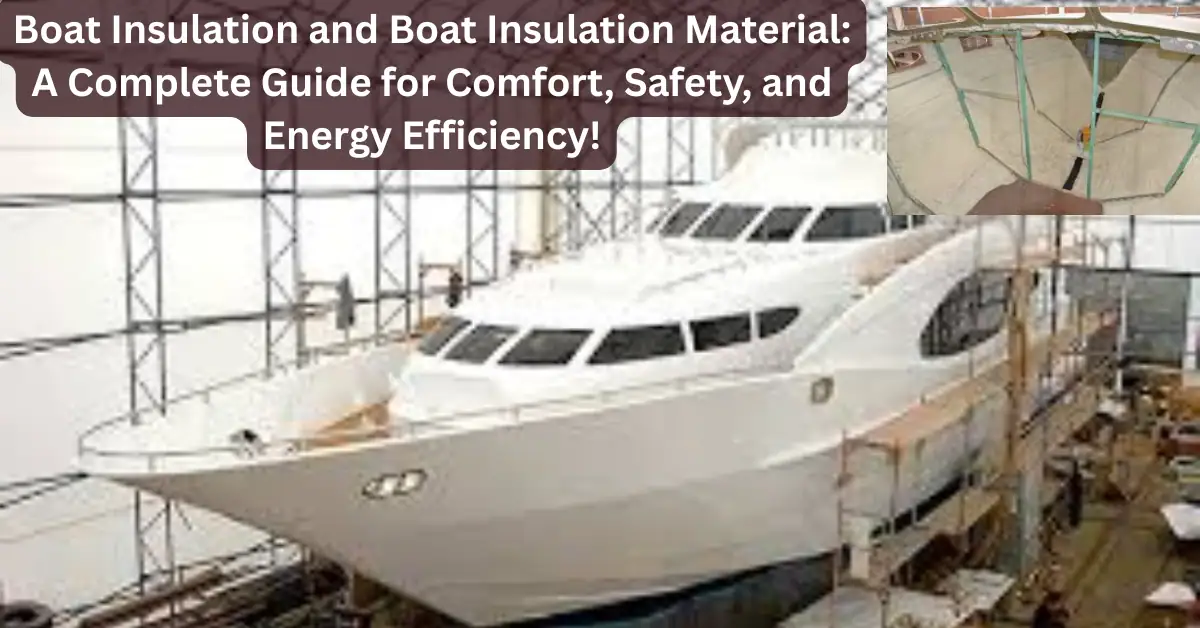
Boat Insulation and Boat Insulation Material are very important to insulate the boat. Though boats are built to stand up to water, rain, and temperature changes, living on one may rapidly become uncomfortable without enough insulation. Insulation is crucial for preserving comfort, lowering noise, safeguarding equipment, and increasing energy efficiency, regardless of whether you own a fishing boat, yacht, sailboat, houseboat, or commercial vessel. In our previous post we shared information about the caravan insulation. Just click and read this post.
Many yacht owners overlook insulation in favour of engines, navigation systems, or furnishings. On the other hand, everyday sailing pleasures can be greatly enhanced by appropriate boat insulation. It keeps the cabin cool in the summer, warmer on chilly evenings, and quieter when the engine is running. Additionally, moisture damage, mould growth, and condensation are all prevented by good insulation.
This comprehensive guide will teach you all there is to know about boat insulation, including the best marine insulation materials, their advantages, installation advice, and how to pick the best insulation for your boat.
Boat insulation: what is it?– Boat Insulation
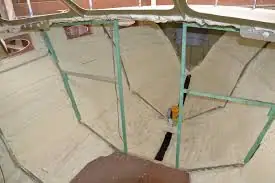
Special materials put inside a boat to regulate temperature, lessen noise, and provide moisture protection are referred to as boat insulation. Marine insulation must endure water exposure, humidity, vibration, salt air, and shifting weather conditions, in contrast to insulation used in homes.
Typically, boat insulation is installed in:
The walls of the cabin
Ceilings
The floors
Rooms for engines
Interiors of the hull
Compartments for storage
Areas with refrigeration
Over time, the proper insulation maintains the boat’s structure and enhances comfort.
The Significance and Importance of Boat Insulation
The amount of heat, cold, and noise that may pass through a boat’s fibreglass or metal surfaces is often underestimated. Boats need insulation because they are always in contact with water and the elements.
1. Control of Temperature– Boat Insulation
Boat insulation contributes to a steady internal temperature. It keeps the cabin warm in the cold. It prevents heat from the outside from entering throughout the summer.
This saves energy and lessens the demand for air conditioners or heaters.
2. Preventing Moisture and Condensation
One of the main issues with boats is condensation. Water droplets are created when cold metal or fibreglass surfaces come into contact with warm air.
In the absence of insulation, condensation may result in:
The growth of mould
Mildew
Corrosion and rust
Wood that is rotting
Unpleasant smells
A heat barrier produced by adequate insulation reduces condensation.
3. Reduction of Noise
Wind, waves, generators, and boat engines produce significant noise. Because insulation absorbs vibration and sound, the cabin is calmer and quieter.
This is particularly crucial for:
• Cruising over long distances
• Cabins for sleeping
• Exotic boats
Boats used for fishing
4. Efficiency of Energy
Boats with insulation use less heating and cooling. As a result, onboard systems use less fuel and pay less for energy.
5. Enhanced Comfort
Instead of feeling like a chilly or hot metal shell, a well-insulated boat feels more like a cozy home.
Types of Boat Insulation Material
For marine or boat insulation or applications, a variety of insulating materials are available. Every substance has its own advantages and disadvantages.
Your boat type, climate, and budget will all play a role in your decision.
1. Insulation made of foam board
One of the most common choices for boat insulation is foam board. It offers superior heat resistance and is available in stiff panels.
Typical Types– boat insulation materials
Foam board made of polyurethane
Foam board made of polystyrene
Foam board made of polyisocyanurate
Benefits
Lightweight
Water-resistant
High value of insulation
Simple to install and cut
Effective moisture management
Drawbacks
It can be challenging in curved areas.
Some varieties are combustible.
Needs to be fitted carefully
Ideal and Best Applications
The walls of the cabin
The floors
Interiors of the hull
Ceilings
2. Insulation using Spray Foam
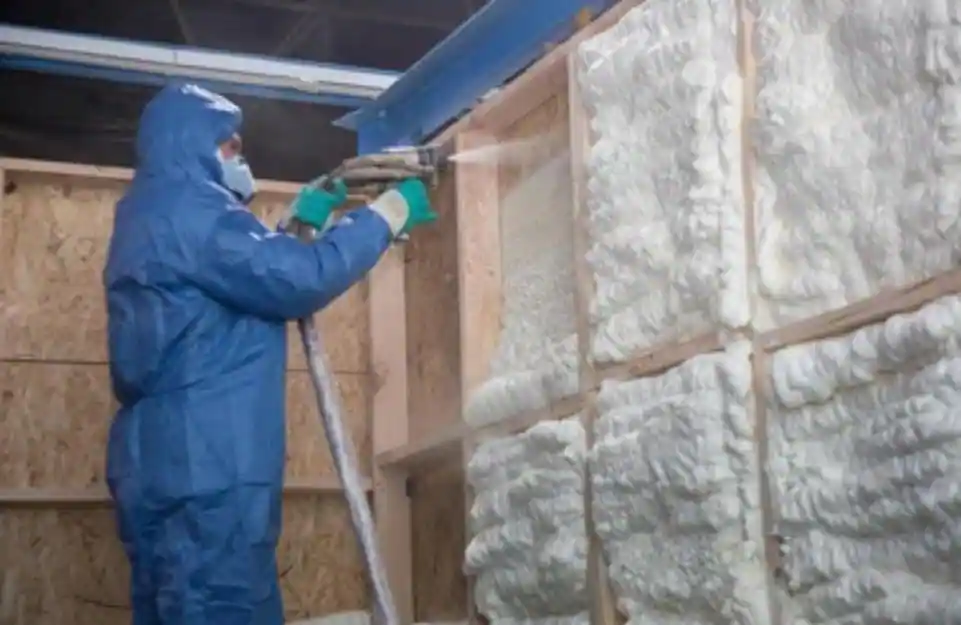
After application, spray foam expands and fills in all gaps. It offers superior air sealing and insulation.
Benefits
Better insulation against heat
Outstanding resistance to moisture
Completes difficult-to-reach places
Minimises condensation
Strong soundproofing drawbacks
More costly
Hard to get rid of
In certain situations, expert installation is necessary.
Ideal and Best Applications– boat insulation
Cavities in the hull
The engine chambers
Spaces that are difficult to access
For long-term performance, spray foam is regarded as one of the best marine insulating options.
3. Insulation made of fibreglass
Fibreglass insulation is frequently seen in houses and occasionally in boats. It is supplied as rolls or batts composed of tiny glass fibres.
Benefits
• Inexpensive
• Simple to locate
• Effective absorption of sound
Drawbacks
Takes up moisture
When wet, it may become less effective.
Could promote the growth of mould
During installation, irritation to the skin and lungs
Ideal Applications
Only dry interior cabin spaces
Because maritime areas are inherently humid, fibreglass is not as popular for boats.
4. Insulation Using Reflective Foil
Aluminum foil surfaces are used in reflective insulation to divert heat.
Benefits
Lightweight
Resistant to moisture
Excellent heat reflection
Flexible and thin
Drawbacks
Limited insulating value on its own
It functions best when paired with air gaps.
Ideal Applications
Cabin roofs
Boats in hot climates
Heat shielding for engine rooms
5. Closed-cell foam insulation
Closed-cell foam is highly recommended for use in maritime environments since it does not absorb water.
Advantages
Water-resistant
Excellent performance as an insulator
Sturdy and durable
Avoids condensation
Lightweight Disadvantages
A price increase
You might need a professional installer.
Perfect Uses
Hull insulation
Bilge areas
The chambers of engines
Cold-weather boats
Closed-cell foam is one of the greatest choices for modern marine insulation.
6. Mineral Wool Insulation
Mineral wool is made from natural stone or recycled materials.
Advantages
• Fire-resistant
• Soundproofing that works
• Water-resistant
Persistent Disadvantages
• More solid than foam
• More expensive than fibreglass
Perfect Uses
• Engine rooms
• Noise-control areas
• Fire-prone areas
Best Boat Insulation Areas
For optimal effectiveness, proper insulation location is crucial.
Cabin Ceilings and Walls
The greatest temperature transfer occurs in these regions. Comfort is greatly increased by insulating walls and ceilings.
Insulation for the Hull
Outside temperatures and chilly water are immediately applied to the hull. Heat loss and condensation are prevented by hull insulation.
Room for the Engine
Heat and noise are produced in engine rooms. Specialized soundproof insulation enhances safety and lessens vibration.
Floors
In addition to increasing comfort, insulated floors lessen the passage of cold from water below.
Compartments for Refrigeration
Additional insulation improves the efficiency of boat refrigerators and iceboxes.
Things to Take Into Account Before Selecting Boat Insulation
Careful consideration is necessary when choosing the appropriate insulation.
Resistance to Moisture
Marine habitats are humid and damp. Always select insulation that is very resistant to dampness.
Weight
Boat performance and fuel efficiency may be impacted by excessive insulation. Typically, lightweight materials are favoured.
Resistance to Fire
Marine safety is very important. In the vicinity of engines and electrical systems, fire-resistant insulation is particularly crucial.
Thermal Efficiency
Verify the R-value of the insulation. Higher R-values offer better thermal protection.
Installation Ease
While certain materials can be installed by hand, others need to be done by professionals.
Reduction of Noise
Select insulation with good acoustic qualities if quietness is important
Boat Insulation for Various Boat Types
Different insulation techniques are needed for different types of boats.
1. Fishing Boat or Boats for fishing
Fishing boats frequently require waterproof, long-lasting insulation that can withstand harsh weather and temperature fluctuations.
Top choices:
Closed-cell foam
Spray foam
2. Sailboats
Lightweight insulation helps sailboats stay balanced and perform well.
Top choices:
Foam board
Foil that reflects light
3. Houseboats
Strong thermal protection and residential-style comfort are essential for houseboats.
Top choices:
Spray foam
Closed-cell foam
4. Elegant or Luxury Yachts Boats
Comfort and noise reduction are top priorities for luxury boats.
Top choices:
Mineral wool
Acoustic foam
Foam that is closed-cell
How to Put Insulation in a Boat
For long-term efficacy, insulation installation must be done correctly.
Step 1: Clean Up the Place
First, clean the surface.
Before installation, get rid of old materials, moisture, grease, and filth.
Step 2: Take Careful Measurements
To cut down on waste and enhance fitting, measure every surface precisely.
Step 3: Cut the Insulation Material
When cutting foam boards or insulation sheets, use the appropriate tools.
Step 4: Step 4: Use Fasteners or Adhesive
Insulation is frequently secured with marine-grade adhesives.
Step 5: Close Any Gaps
To stop moisture intrusion and air leaks, seal all connections and edges.
Step 6: Add Protective Coverings
Vapour barriers or ornamental wall panels are necessary for some installations.
Typical Issues Without Boat Insulation
A boat with inadequate insulation may face many problems.
Overheating
In the summer, cabins are really hot.
The interior is cold.
Without insulation, winter boating becomes miserable.
Mildew and mould
Fungal growth within the boat is encouraged by condensation.
Corrosion and Rust
Over time, moisture causes deterioration to metal surfaces
Excessive Engine Noise
Uncomfortable noise levels are produced by uninsulated engine rooms.
Boat Insulation Maintenance Advice
The lifespan of insulation is extended by proper maintenance.
Frequent Examinations
Regularly check for loose parts or moisture damage.
Fast Repair of Damaged Areas
In maritime environments, minor issues can escalate quickly.
Maintain a Dry Interior
Dehumidifiers and ventilation aid in preventing the accumulation of moisture.
Change the Wet Insulation
Water-damaged insulation becomes less effective and may grow mould.
Options for Eco-Friendly Boat Insulation
Eco-friendly materials are becoming more and more popular among contemporary boat owners.
Among the sustainable insulation choices are:
Insulation made from recycled denim
Insulation made of cork
Insulation made of natural wool
Products made from recycled foam
These materials enhance onboard comfort while lessening their negative effects on the environment.
The price of boat insulation
The type of material, labour, and size of the boat all affect the cost of boat insulation.
Simple Fibreglass Insulation
Cheaper
Fit for low-budget projects
Insulation for Foam Boards
Reasonably priced
Outstanding value
Insulation Using Spray Foam
• A higher starting price
• Long-term energy conservation
Superior Acoustic Insulation
• Pricey
• Ideal for high-end boats
Quality maritime insulation may first seem expensive, but it frequently saves money by using less energy and requiring less maintenance.
Which Is the Best Material for Boat Insulation?
No single insulating material is ideal for all boats. Certain materials, however, function better in maritime settings.
Best All Around
Many people believe that closed-cell spray foam is the best choice overall because it
• Is resistant to water
• Prevents condensation
• Provides superior thermal protection
• Diminishes noise
The Best Cheap Choice
For a fair price, foam board insulation offers robust performance.
Ideal for Soundproofing
Engine noise can be effectively reduced by using acoustic foam and mineral wool.
Ideal for Warm Climates
In sunny areas, reflective foil insulation helps minimize heat gain.
Upcoming Developments in Marine Insulation
The technology for boat insulation keeps getting better.
Among the innovations are:
Insulation panels that are incredibly light
Sustainable marine insulation
High-tech acoustic materials
Foam systems that are resistant to fire
Intelligent thermal barriers
Insulation will become increasingly more important for comfort and energy efficiency as boating gains popularity.
In the final analysis
There is much more to boat insulation than just a luxury feature. It is crucial to build a long-lasting, cozy, and energy-efficient aquatic environment. Appropriate insulation enhances temperature management, lowers noise, stops condensation, and safeguards your investment, whether you own a big yacht or a tiny fishing boat.
Your boat’s kind, climate, budget, and unique requirements all play a role in selecting the best boat insulation material. Among the most dependable materials available today are mineral wool, foam boards, spray foam, and closed-cell foam.
In addition to being more comfortable, a well-insulated boat eventually requires less upkeep. Boat owners can have smoother, quieter, and more pleasurable adventures on the water for many years by investing in high-quality insulating materials and installing them correctly.
Do let us know how you feel about this information by commenting.
Like our Facebook page and follow for other updates like this.